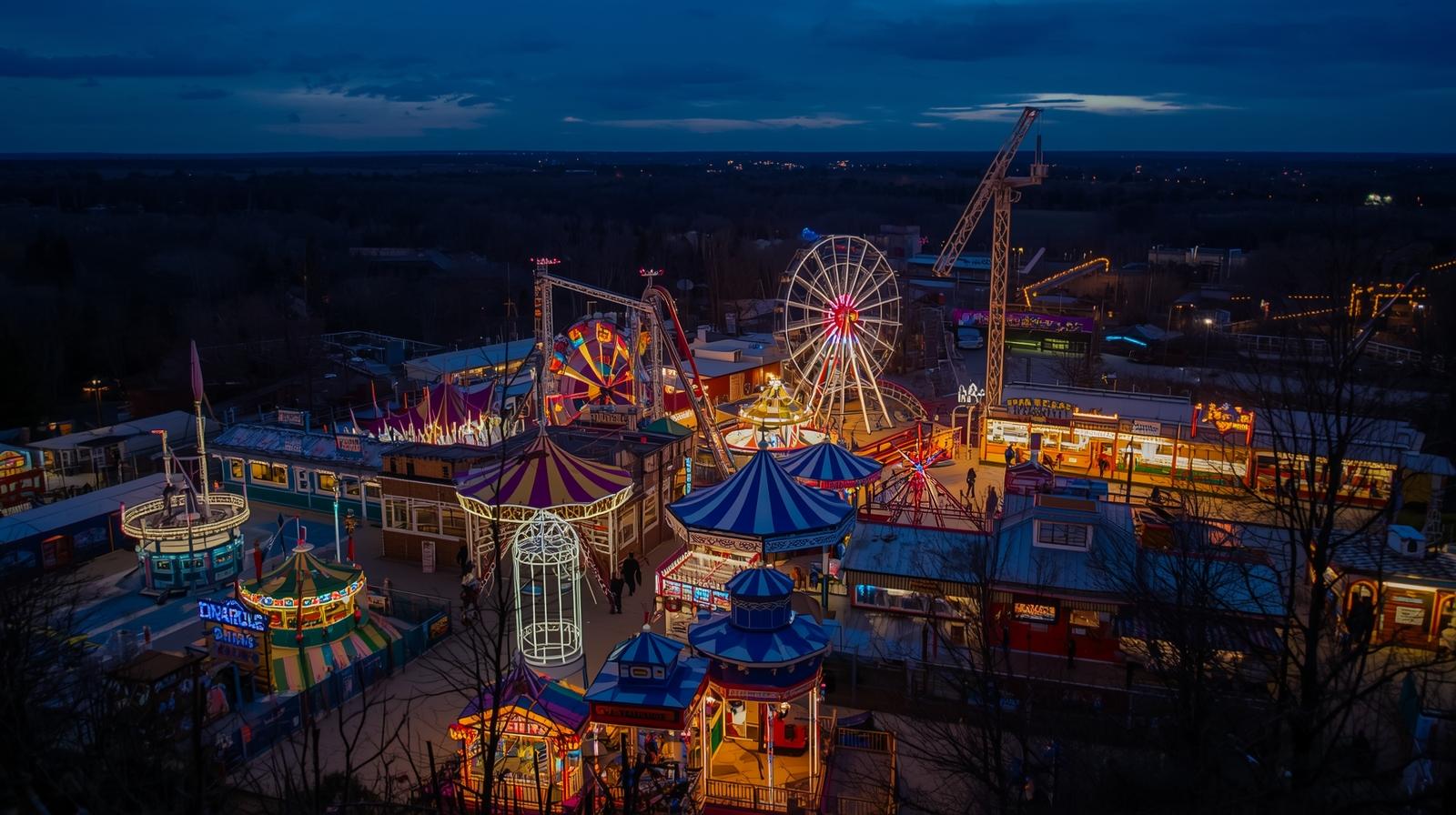
How to Expand from One Attraction to a Small Amusement Park
18 February 2026
Expanding from a single attraction to a small amusement park is not about adding more rides
— it is about building a scalable system that increases capacity and revenue without multiplying operational risk.
Operators who succeed in this transition plan expansion from the very first purchase, not after the business becomes complex.
Why most expansions fail
Many operators struggle when scaling because they:
- buy attractions independently instead of as a system,
- add equipment that requires new staff or skills,
- increase complexity faster than capacity,
- lock capital into fixed installations too early.
As a result, revenue grows slower than costs — or stagnates entirely.
The correct expansion logic (used by profitable parks)
1. Start with a flagship attraction
The first attraction should:
- attract attention from a distance,
- work across multiple age groups,
- operate with high throughput,
- define the park’s visual identity.
This attraction sets the tone for everything that follows.
2. Add complementary attractions — not competitors
Expansion works when new units:
- reuse existing operators and supervision,
- share safety procedures and documentation,
- increase dwell time rather than split attention,
- raise average spend per visitor.
Adding attractions that compete for the same staff or audience creates bottlenecks instead of growth.
3. Reuse staff and operational infrastructure
A scalable park:
- trains staff once, not repeatedly,
- uses compatible safety systems,
- simplifies daily operations,
- avoids fragmented responsibility.
This keeps staffing costs stable while capacity increases.
Modular equipment vs fixed installations
Fixed attractions:
- require long shutdowns to modify,
- are difficult to relocate or resell,
- lock capital permanently,
- slow down strategic pivots. Modular attractions:
- allow phased expansion,
- can be rearranged seasonally,
- support testing before full commitment,
- preserve resale value.
For small parks, modularity is a financial safety net.
From one attraction to a park: a realistic expansion path
A typical progression looks like this:
- One high-impact, flagship attraction.
- Two or three complementary units.
- A defined park layout with flow and visibility.
- Gradual capacity increases without changing staffing ratios. This approach allows revenue to grow faster than complexity.
Compliance and insurance during expansion
As a park grows:
- inspections become more frequent,
- insurers reassess overall risk,
- documentation must remain consistent. Using compatible, certified equipment:
- simplifies inspections,
- prevents insurance gaps,
- avoids forced shutdowns during peak season.
Business conclusion
Expanding into a small amusement park is not a question of size — it is a question of structure. Operators who:
- think modularly,
- reuse people and processes,
- prioritize compliance from the start,
build parks that scale smoothly and remain profitable.
Scalability begins with the first purchase, not the fifth.