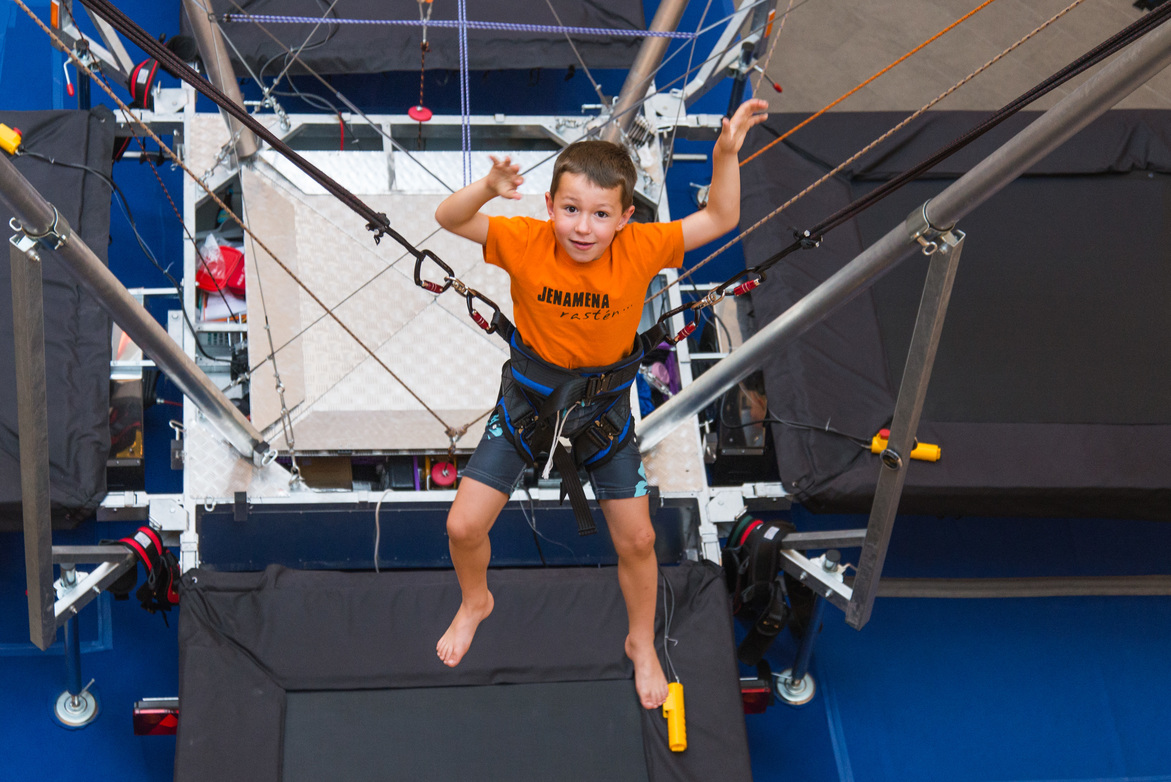
What Attractions for Children at a Festival?
18 February 2026
The best attractions for children at a festival are those that combine strong visual appeal, fast participant turnover, and certified safety systems, allowing continuous operation in a public environment without creating queues, staffing bottlenecks, or compliance issues.
From an operator’s perspective, children’s attractions at festivals must perform under intense time pressure, high footfall, and strict public-safety oversight.
Why children’s attractions are critical for festival success
Children-focused attractions play a strategic role at festivals because they:
- attract families as a core audience segment,
- increase overall dwell time,
- influence spending decisions made by parents,
- stabilize footfall throughout the day.
However, poorly selected children’s attractions often become operational liabilities rather than revenue drivers.
Key decision drivers for festival-ready children’s attractions
1. Short ride cycles = higher hourly revenue
At festivals, demand peaks sharply.
The most effective children’s attractions:
- have short, repeatable participation cycles,
- minimize loading and unloading time,
- allow multiple users per hour,
- avoid long explanations or preparation phases.
Long ride cycles dramatically reduce revenue potential during peak periods.
2. Broad age coverage (not only toddlers)
Attractions limited to very young children:
- reduce the addressable audience,
- create idle capacity when demographics shift,
- lower perceived value for families with mixed-age children. Festival-ready attractions should:
- accommodate a wide age range,
- scale intensity or experience level,
- remain appealing as children grow older. This maximizes utilization across the entire event.
3. High visual appeal in crowded environments
Children’s attractions must compete visually with:
- food vendors,
- stages and performances,
- merchandise stands,
- other rides. Strong visual presence:
- draws spontaneous attention,
- reduces reliance on signage or staff promotion,
- increases impulse participation.
Attractions that are not visible from a distance struggle to convert foot traffic.
4. Certified safety for public operation
Children’s attractions operate under heightened scrutiny:
- parental oversight,
- organizer responsibility,
- insurance and authority inspections. This requires:
- certified safety systems,
- clear operating procedures,
- equipment designed for public use, not private play.
Certified attractions pass inspections faster and reduce operational stress.
5. Predictable staffing model
Festival operators favor attractions that:
- use simple, repeatable operating procedures,
- require minimal specialized training,
- avoid frequent staff rotation,
- maintain consistent supervision standards.
Complex staffing models increase cost and risk during busy events.
Types of children’s attractions that perform best at festivals
Based on real event operations, high-performing categories include:
- mechanical attractions with controlled motion,
- multi-user interactive activity zones,
- attractions that allow parental visibility and supervision,
- systems designed for continuous, all-day operation.
What matters is not the category itself, but how well the attraction performs under festival conditions.
Common mistakes when choosing children’s attractions
Operators often underestimate:
- how quickly queues form,
- how staffing affects throughput,
- how inspections impact setup time,
- how age limitations reduce utilization.
Attractions that look appealing in isolation may fail in dense, public environments.
Business impact for festival operators
Well-chosen children’s attractions result in:
- higher revenue per event day,
- smoother crowd flow,
- fewer complaints from parents and organizers,
- stronger relationships with event promoters,
- repeat bookings across multiple festivals.
Business conclusion
The best attractions for children at a festival are not defined by how “fun” they look — but by how
efficiently and safely they operate under real festival conditions. Attractions that deliver:
- fast turnover,
- broad age appeal,
- strong visibility,
- certified safety,
- predictable staffing,
consistently outperform low-capacity, non-certified alternatives.
At festivals, children’s attractions must work as revenue engines — not bottlenecks.