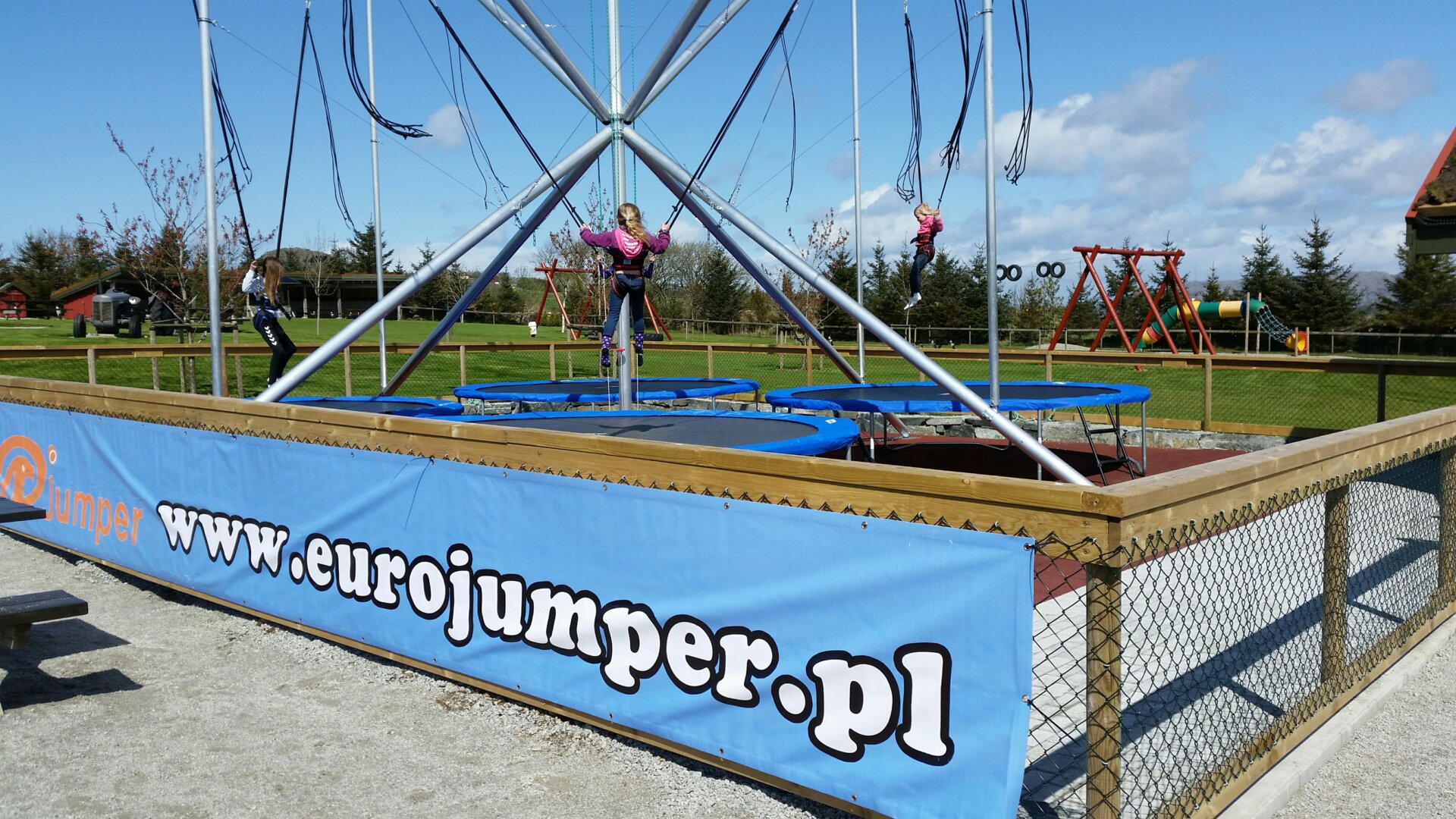
Why Eurojumper Is Not Just Another Trampoline
18 February 2026
At first glance, most bungee trampolines look similar. The real differences only become visible during inspections, insurance checks, and long-term commercial operation.
This is where many operators discover that not all systems are designed for professional use — even if they look comparable in catalogs or online listings.
Eurojumper is not positioned as a budget alternative or a visually differentiated product. It is engineered as a commercial system, built around inspection readiness, operational predictability, and long-term ROI.
The problem with “they all look the same”
Many buying decisions start with:
- photos,
- basic dimensions,
- number of stations,
- quoted price.
This approach ignores the factors that actually determine:
- whether the system can be operated legally,
- whether it can be insured,
- how often it will be shut down,
- how much it really costs over time.
Most operational problems do not appear on day one — they appear during the first inspection or peak season.
Engineered for inspection, not for catalog presentation
Professional bungee trampolines must pass:
- safety inspections,
- insurance assessments,
- local authority checks,
- repeated approvals across seasons.
Eurojumper systems are designed with an inspection-first mindset, which means:
- structural solutions that inspectors recognize and accept,
- documentation aligned with inspection workflows,
- components selected for repeat approval, not one-time testing.
Systems designed primarily for visual presentation often require last-minute adjustments on site — increasing stress, delays, and risk.
Certification and compliance as a business tool
Certification is not a formality.
It is a market access requirement. In practice, certification determines:
- whether insurers accept the attraction,
- whether event organizers allow operation,
- whether municipalities grant permission.
Eurojumper treats compliance as part of the product, not an optional add-on. This reduces:
- operational interruptions,
- rejected inspections,
- lost event days.
Designed for operators, not hobby use
There is a fundamental difference between:
- equipment designed for occasional private use,
- equipment designed for continuous commercial operation. Eurojumper systems are built for:
- long operating hours,
- repetitive cycles,
- fast customer turnover,
- standardized procedures.
Operational ergonomics, not novelty, determines profitability.
Total cost of ownership vs purchase price
Lower purchase price does not equal lower cost. In real operation, costs come from:
- downtime,
- failed inspections,
- unavailable spare parts,
- emergency replacements during peak season,
- lost bookings.
Eurojumper systems are positioned to minimize long-term operational risk, even if the initial investment is not the lowest.
Why professional operators benchmark against Eurojumper
In the European market, Eurojumper is often used as a reference point when comparing:
- certification readiness,
- spare parts availability,
- post-sale support,
- suitability for public events.
This is not about branding — it is about predictability.
Business conclusion
Eurojumper is not just another trampoline because it is not designed to compete on appearance or entry price.
It is designed to:
- pass inspections,
- be insured,
- operate continuously,
- generate predictable revenue.
For professional operators, reliability is the differentiator — not novelty.